
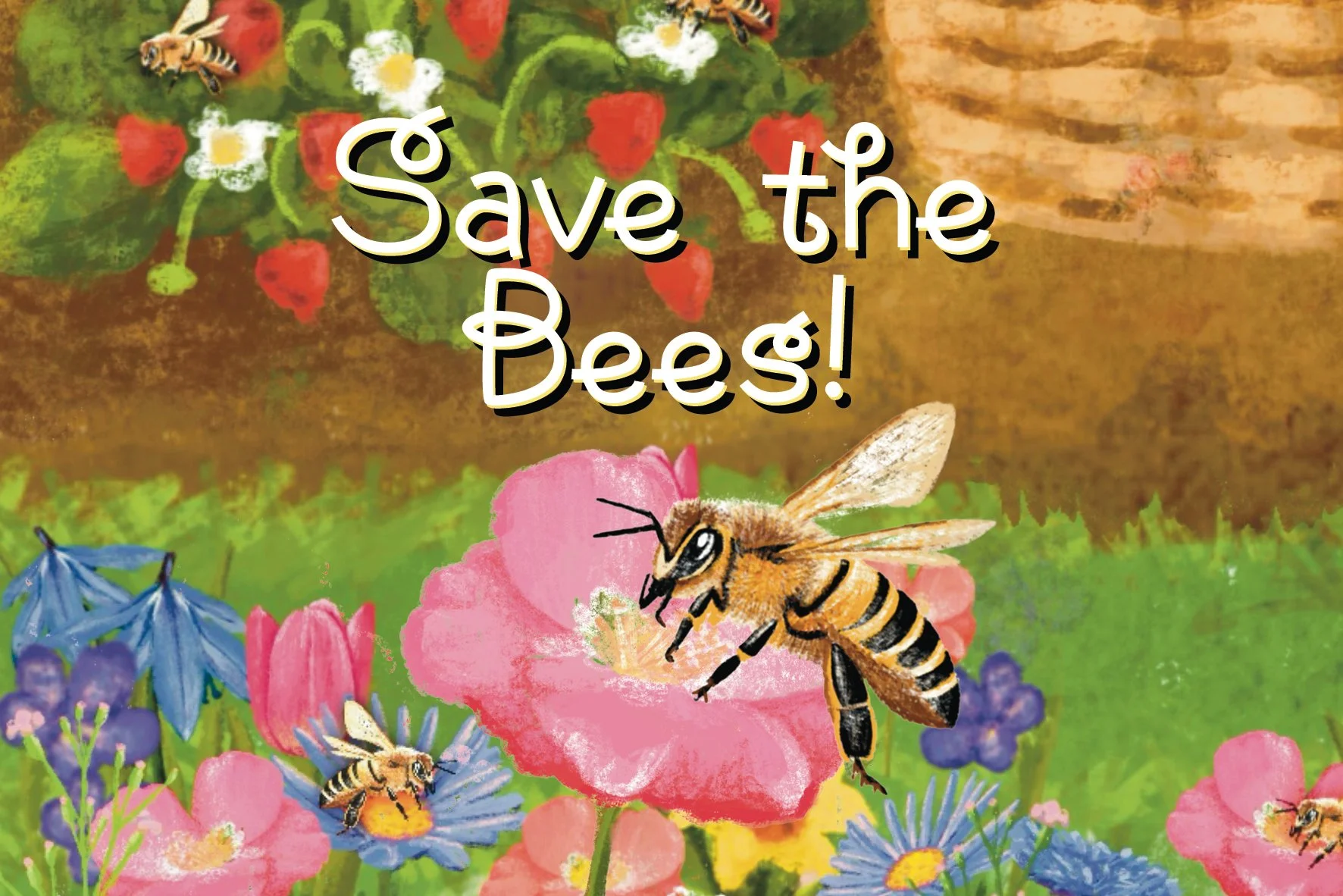
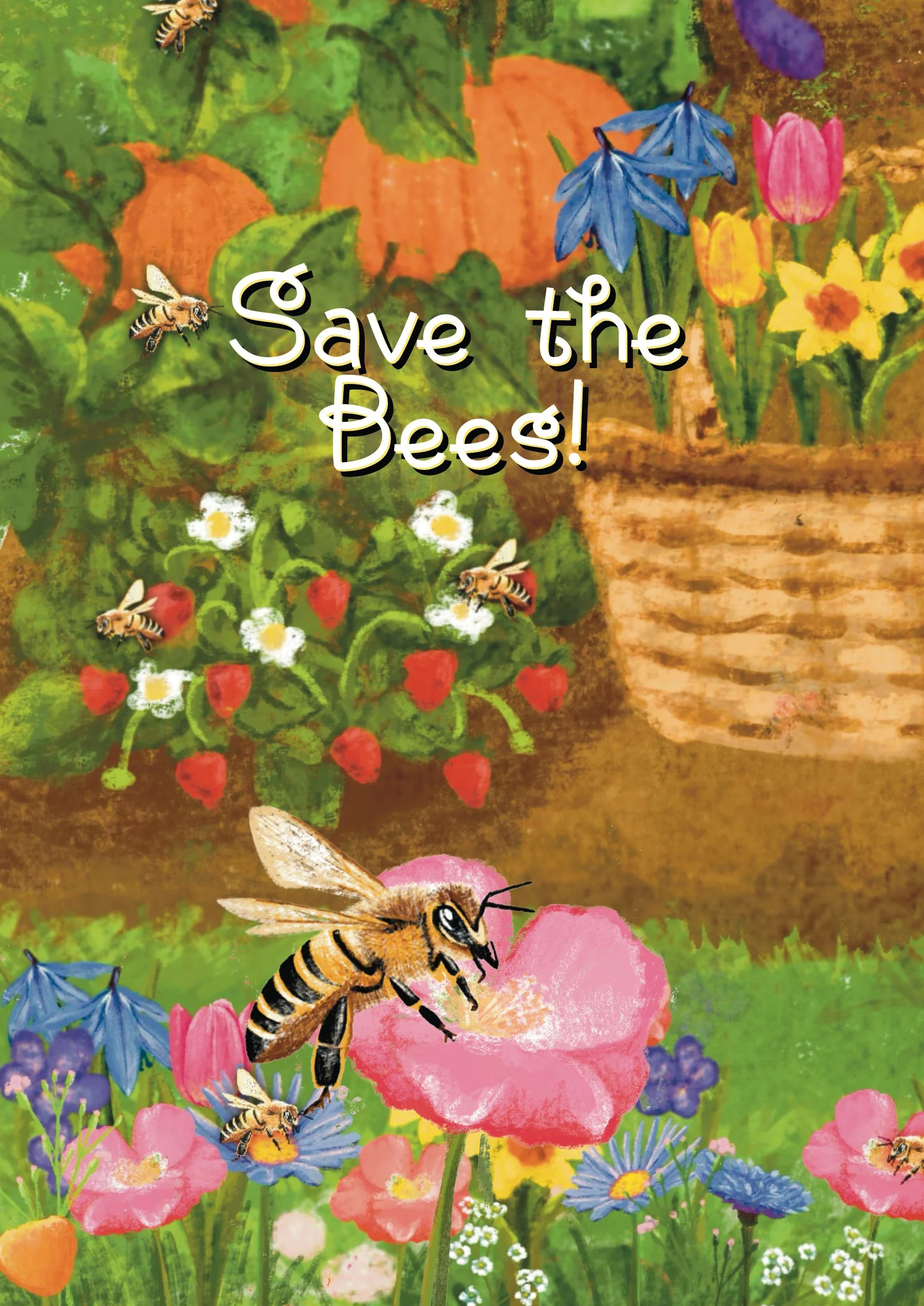
Save the Bees
Special Topic Project, Solo (8 weeks)
An investigation of a creative project that explores a context, subject and medium within the field of media design.
Tools: Adobe Photoshop & Procreate
Made a physical book.
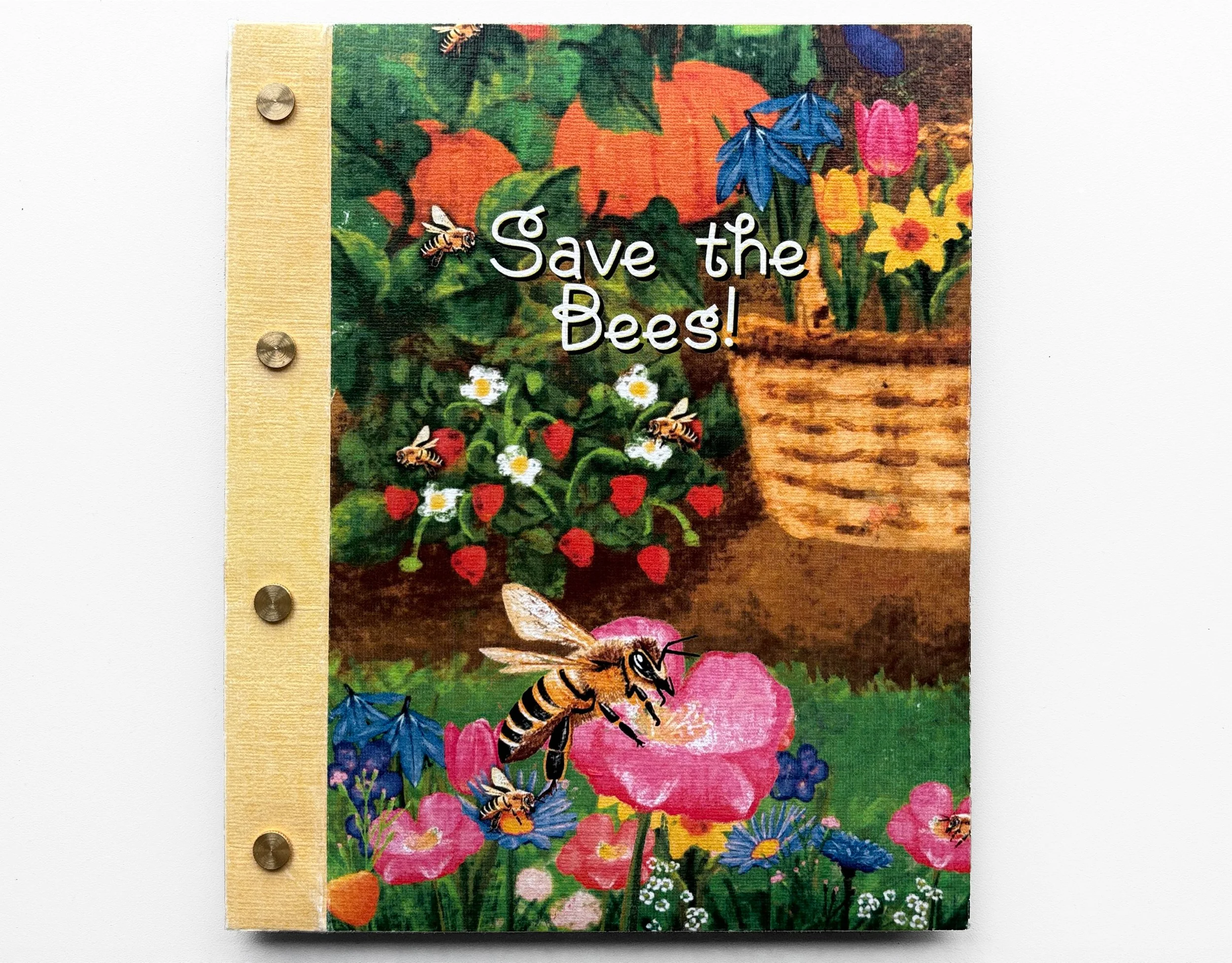
A research-based exploration of how illustration and storytelling in book design can educate audiences about bee conservation and its vital role in our ecosystem.
-
Bees play a crucial role in pollination, contributing billions to New Zealand’s economy through the production of fruits and vegetables.
However, the population of bee colonies in New Zealand has drastically declined, falling from a peak of 918,000 hives in 2019 to just 512,000 hives by 2025. Without human intervention, bees may soon become endangered, which could lead to significant disruptions in both the ecosystem and agriculture.
Using illustrated book design in a storytelling approach effectively educates the public about the importance of saving bees in a visually engaging manner. -
How can I use illustrated book design and storytelling to educate about bee conservation and its importance to our ecosystem?
Medium : Illustrated book design
Context : Storytelling
Goal : Educate & Awareness
Subject : Bee conservation -
This was one of my most research-intensive projects, and I particularly enjoyed the research phase, where I learned about bees, their importance to the ecosystem, and how storytelling can support learning. This project also taught me that design goes beyond aesthetics, it is about understanding the audience and making research-informed decisions that support the project's purpose.
This study tested four hypotheses to answer the research question.
Each hypothesis is backed by research into the reasoning behind the question, along with documentation of my thought process as I worked through iterations to reach the outcome.
-
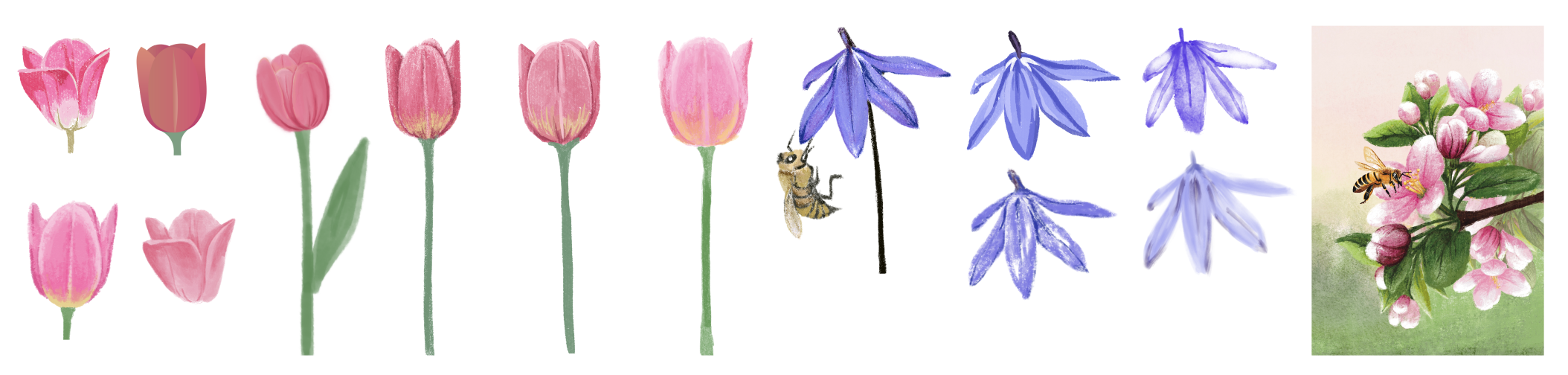
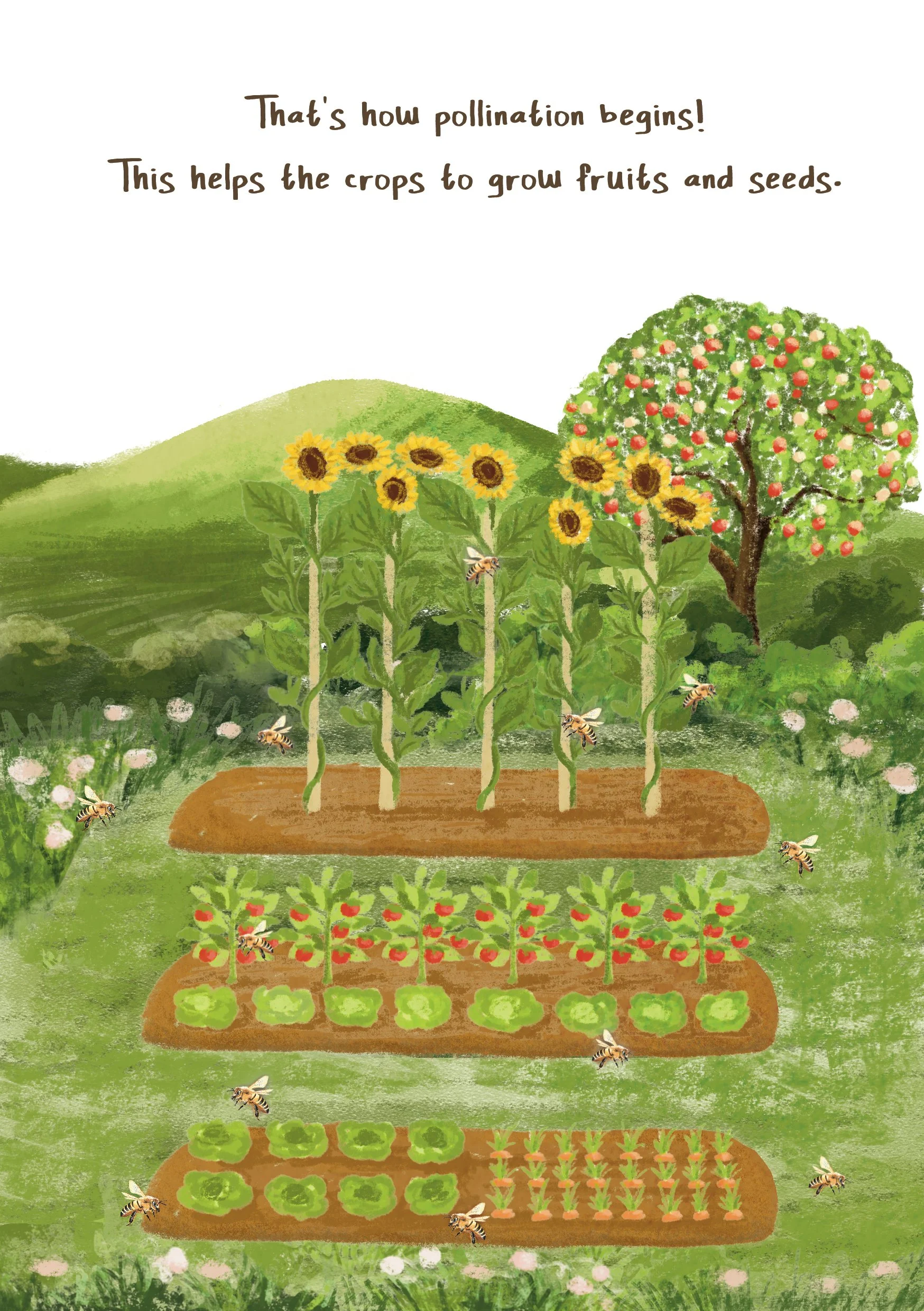
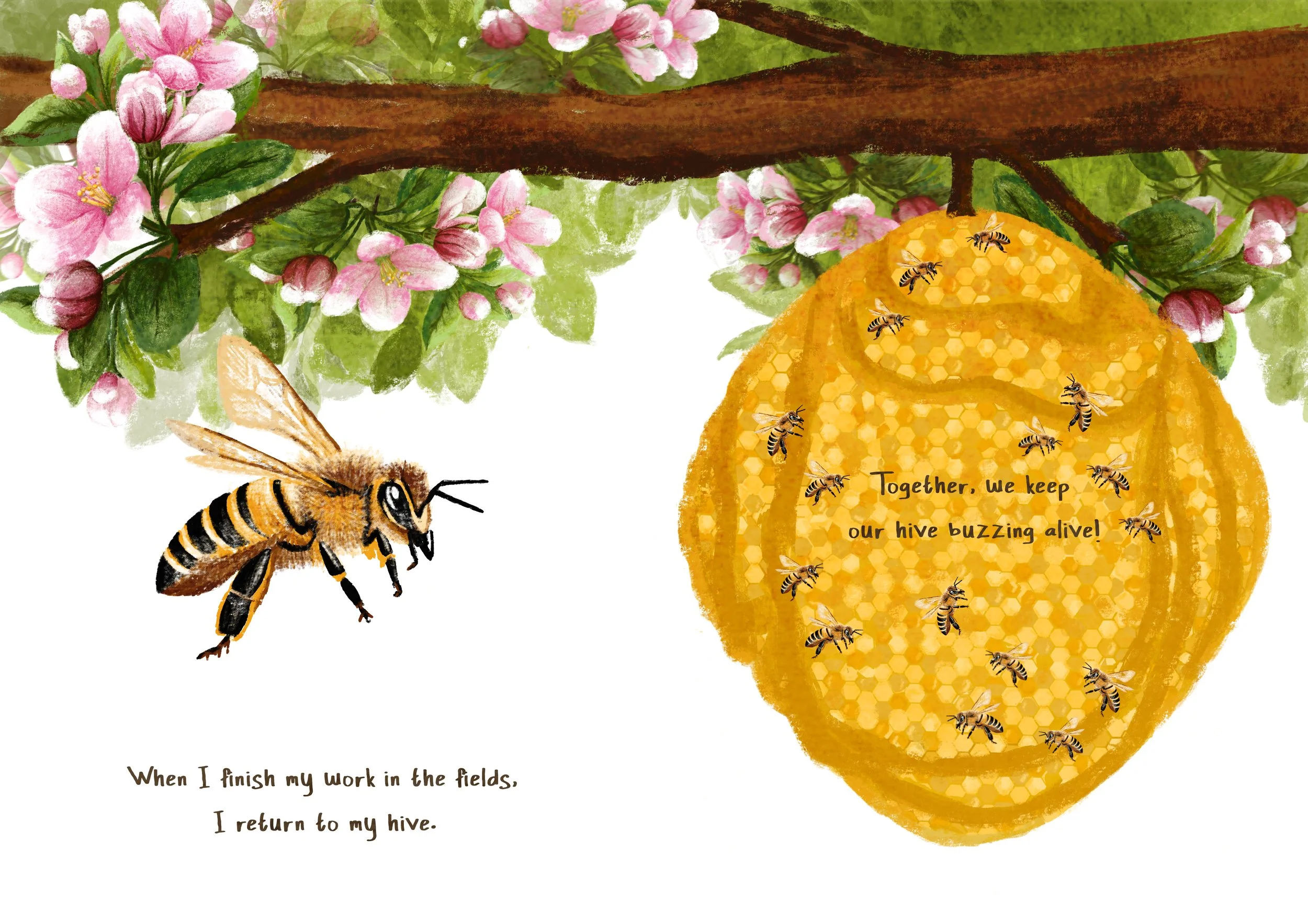
Illustration plays an important role in enhancing engagement by making the story more memorable and immersive. Through experimenting with various illustration mediums, it is clear that each style conveyed a different mood and level of detail. While watercolour and oil painting have a soft, visually appealing aesthetic, they lacked the vibrant energy the story needed. The crayon brush felt like the natural choice because of its rich texture, hand-drawn quality, and sense of depth, all of which complemented the story's cosy, natural atmosphere. Its familiarity with children made it an even better fit, as the warmth of the illustrations felt right for a young audience.
-
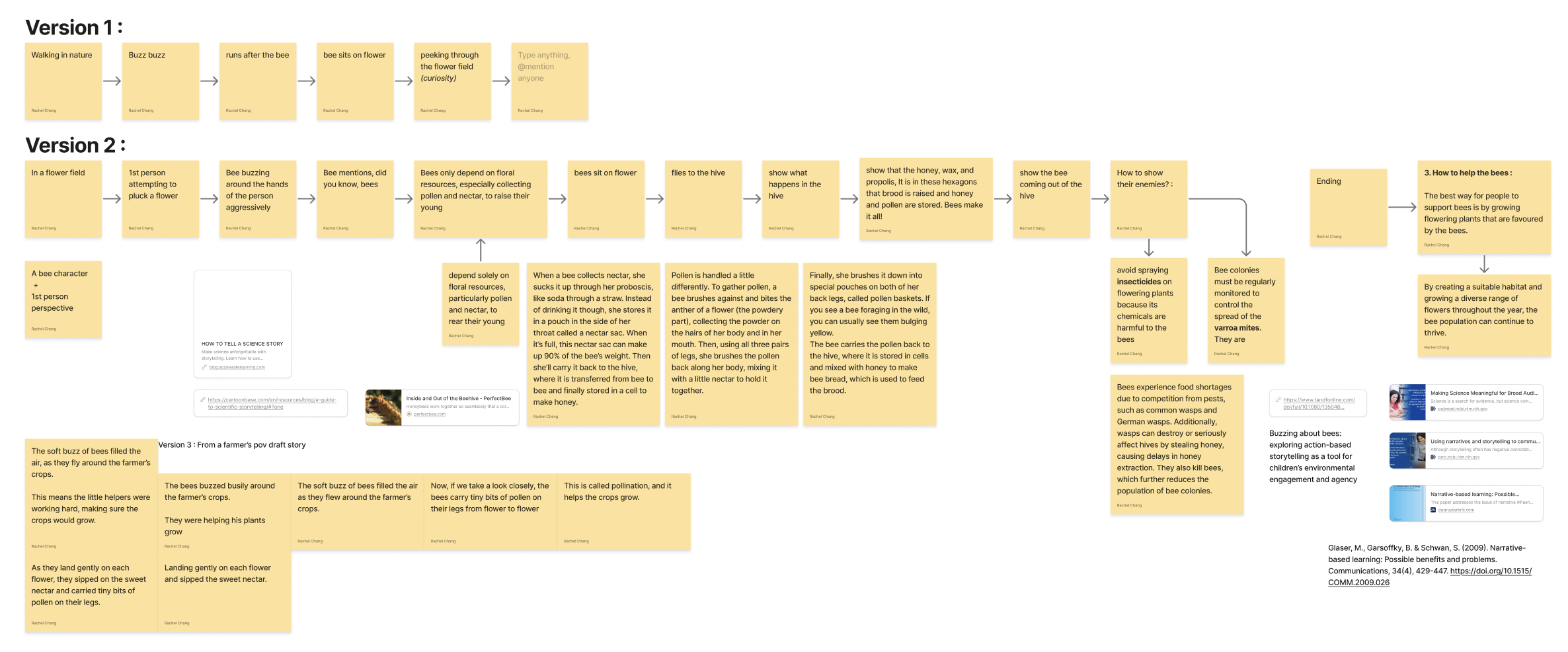
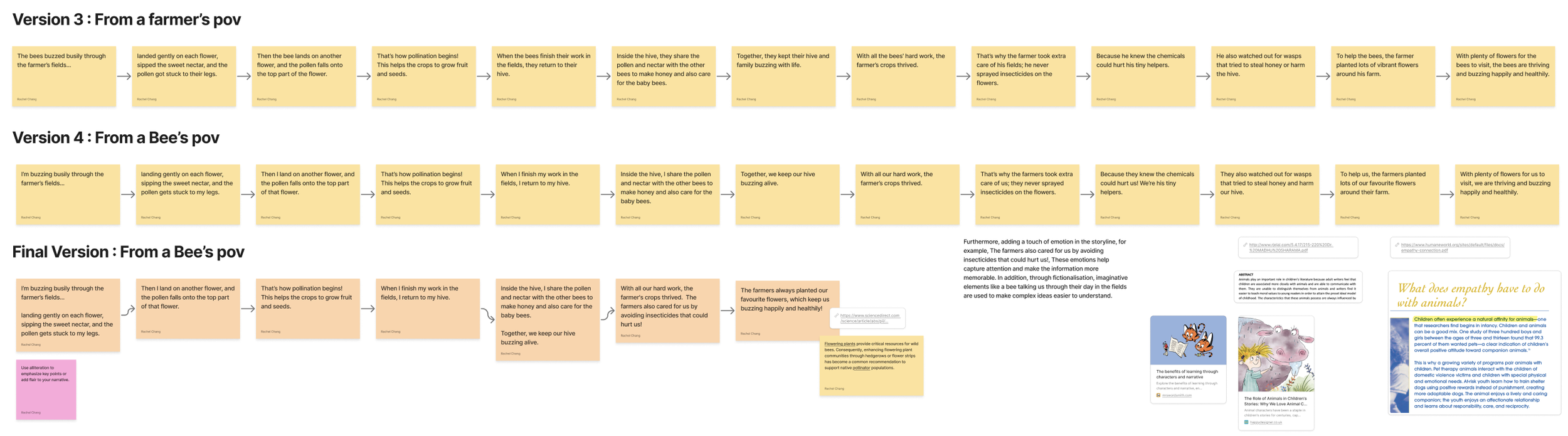
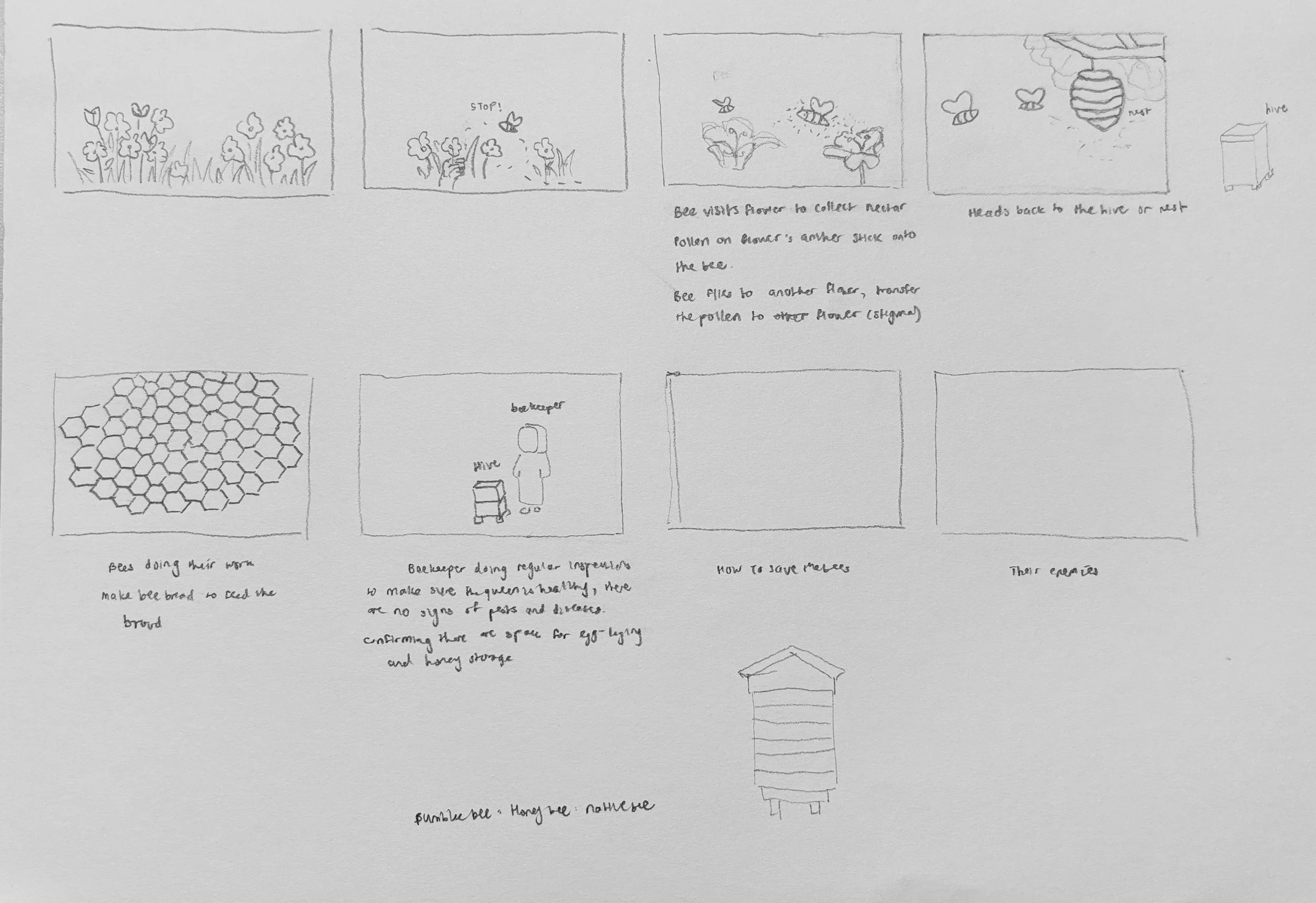
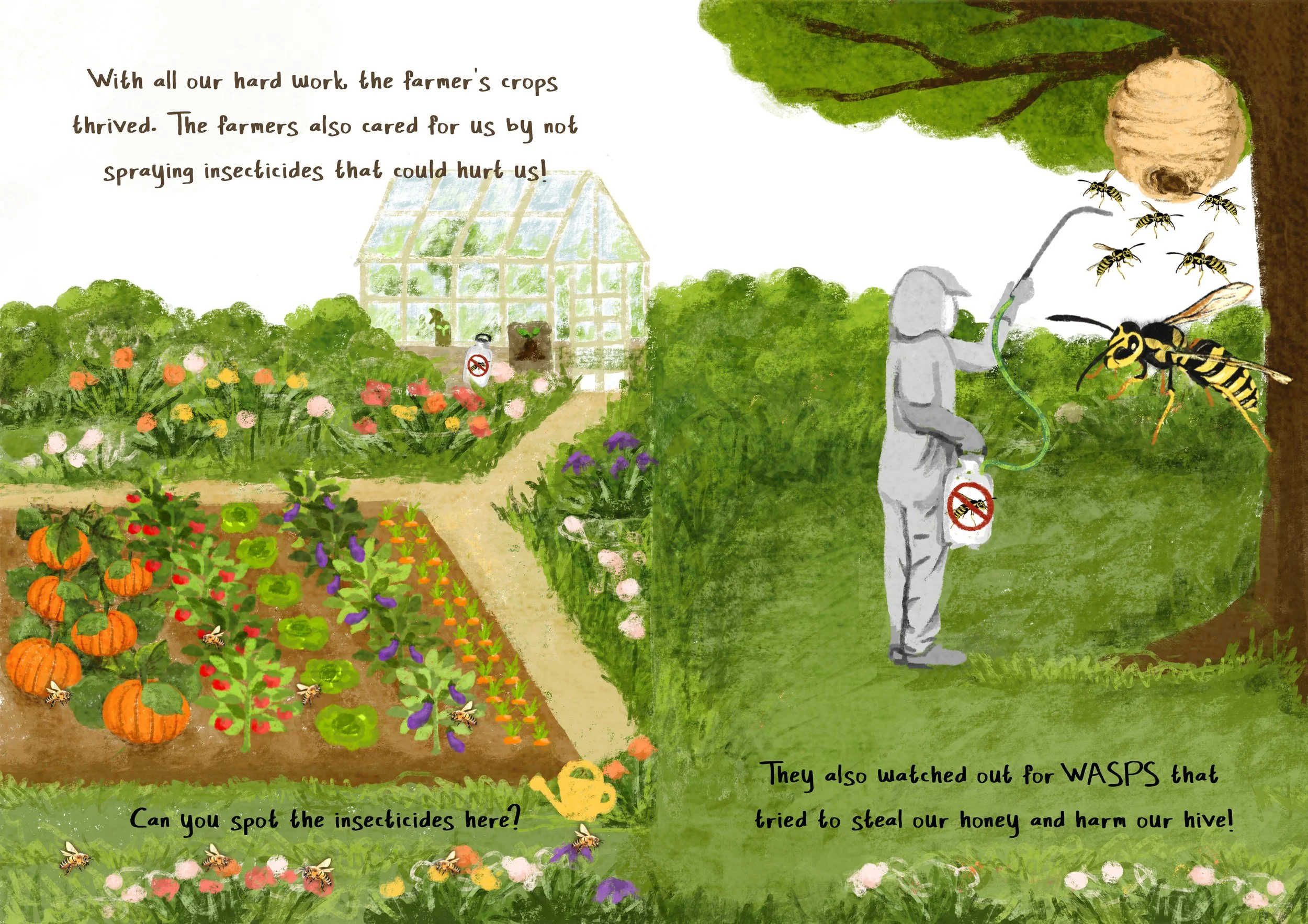
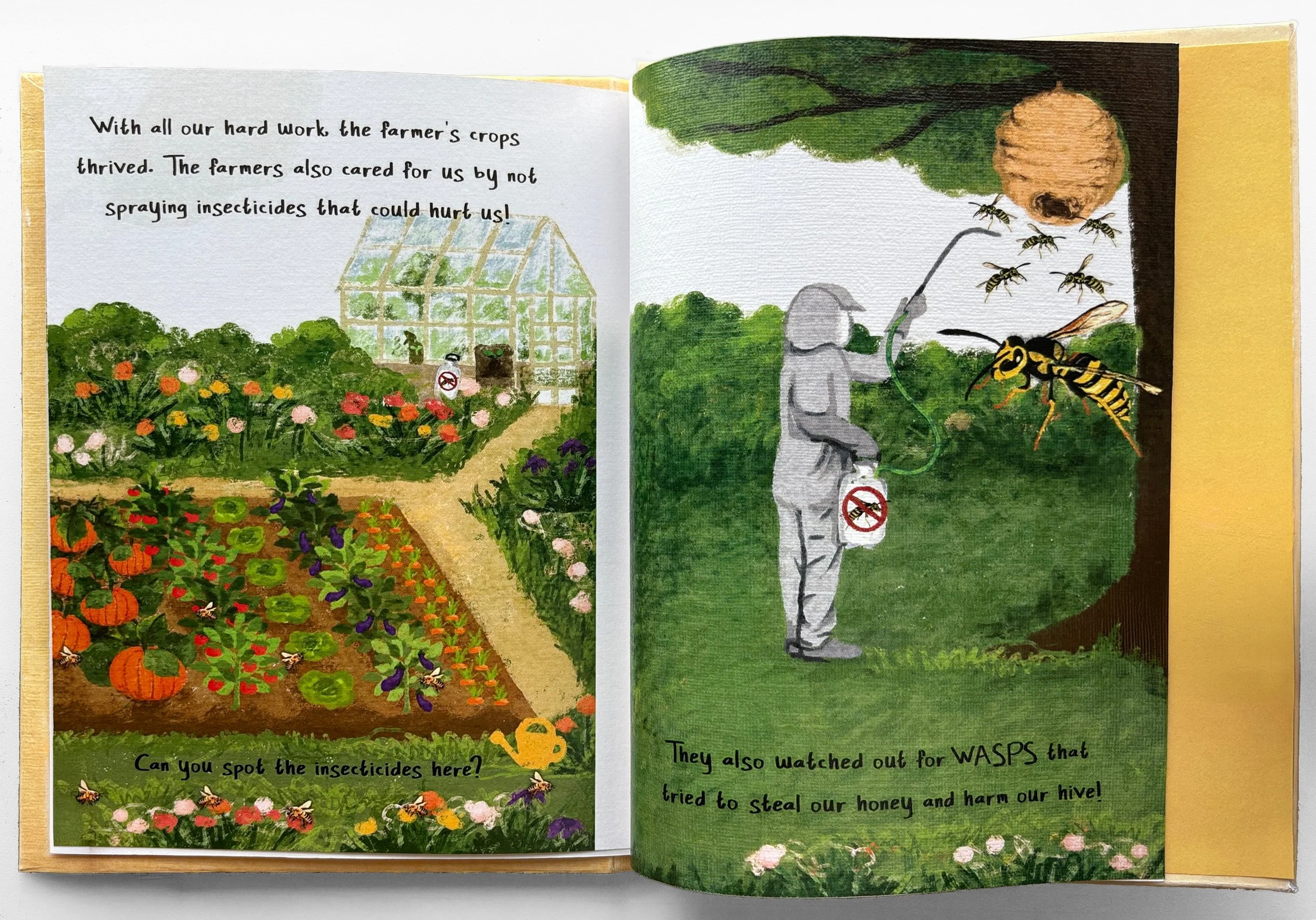
Research shows that stories are easier to understand and remember than traditional scientific information, making storytelling a natural way to bring bee facts to life. Through experimentation with different perspectives, the story shifted from a human point of view to a farmer's and, finally, to a bee’s. From the bee's perspective, readers can connect emotionally with the subject and understand concepts such as pollination more meaningfully. By blending personalisation, emotion, and fiction, the story became genuinely enjoyable without losing its educational value, a good balance that keeps things light-hearted and accessible for children.
-
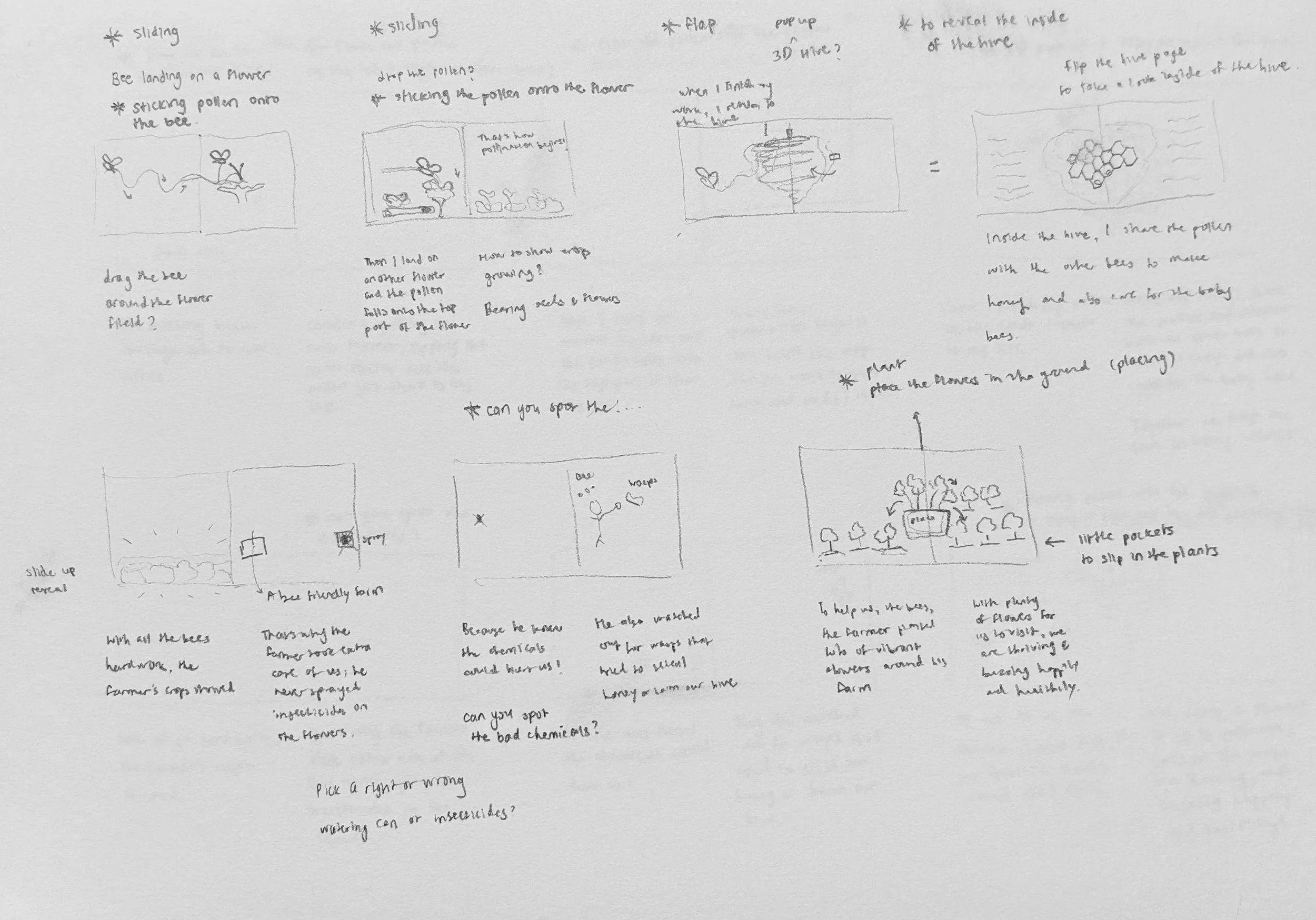
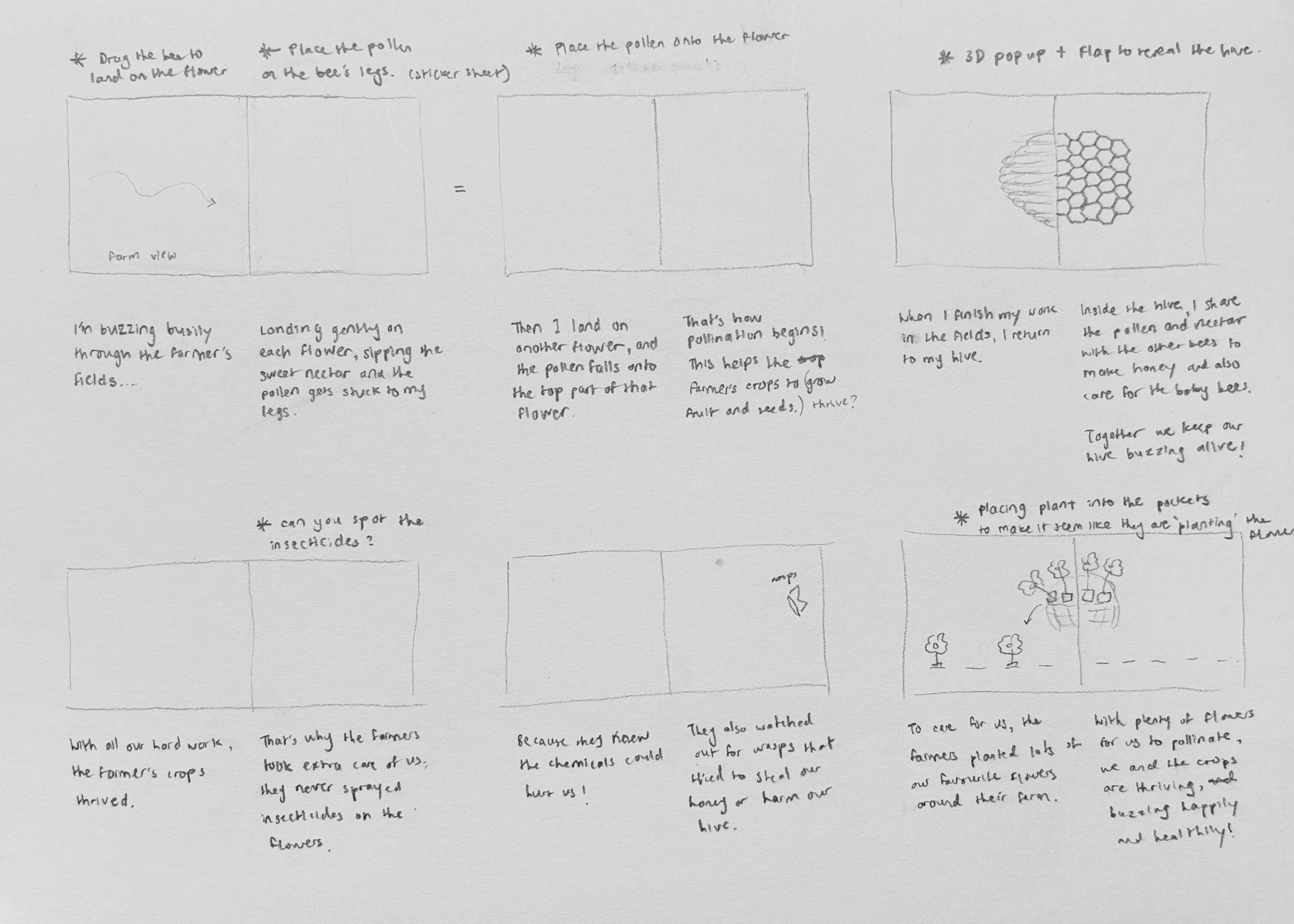
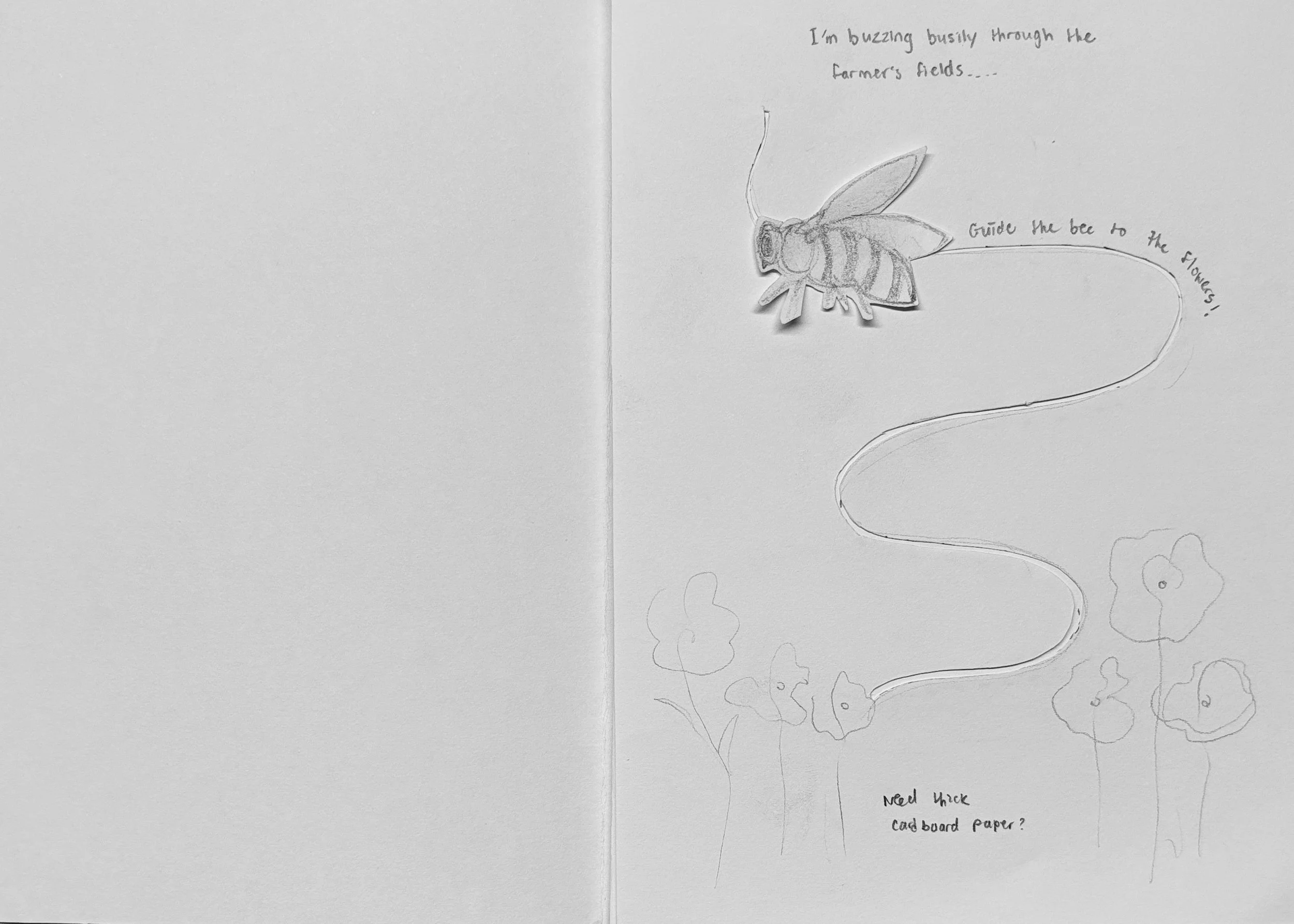
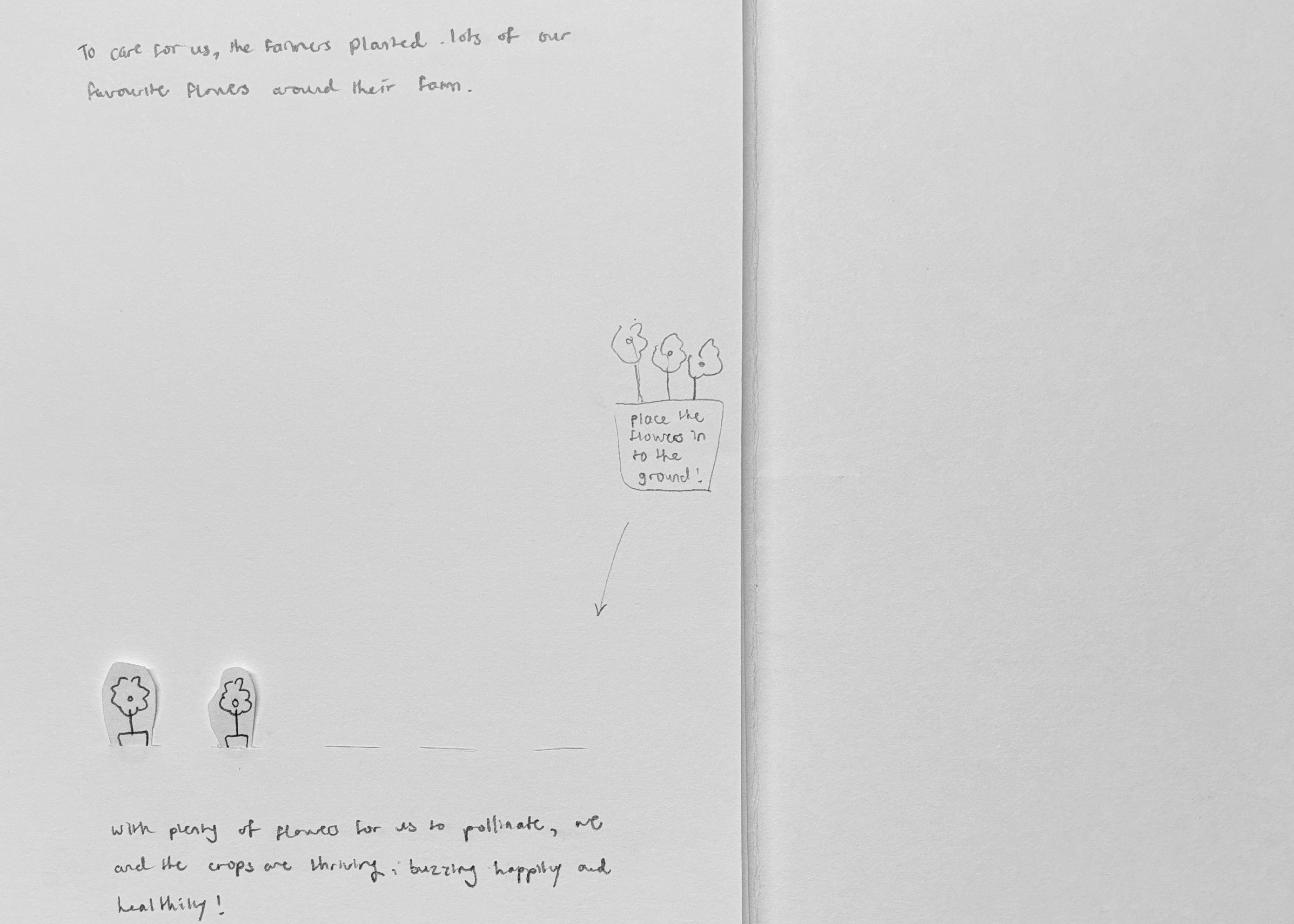
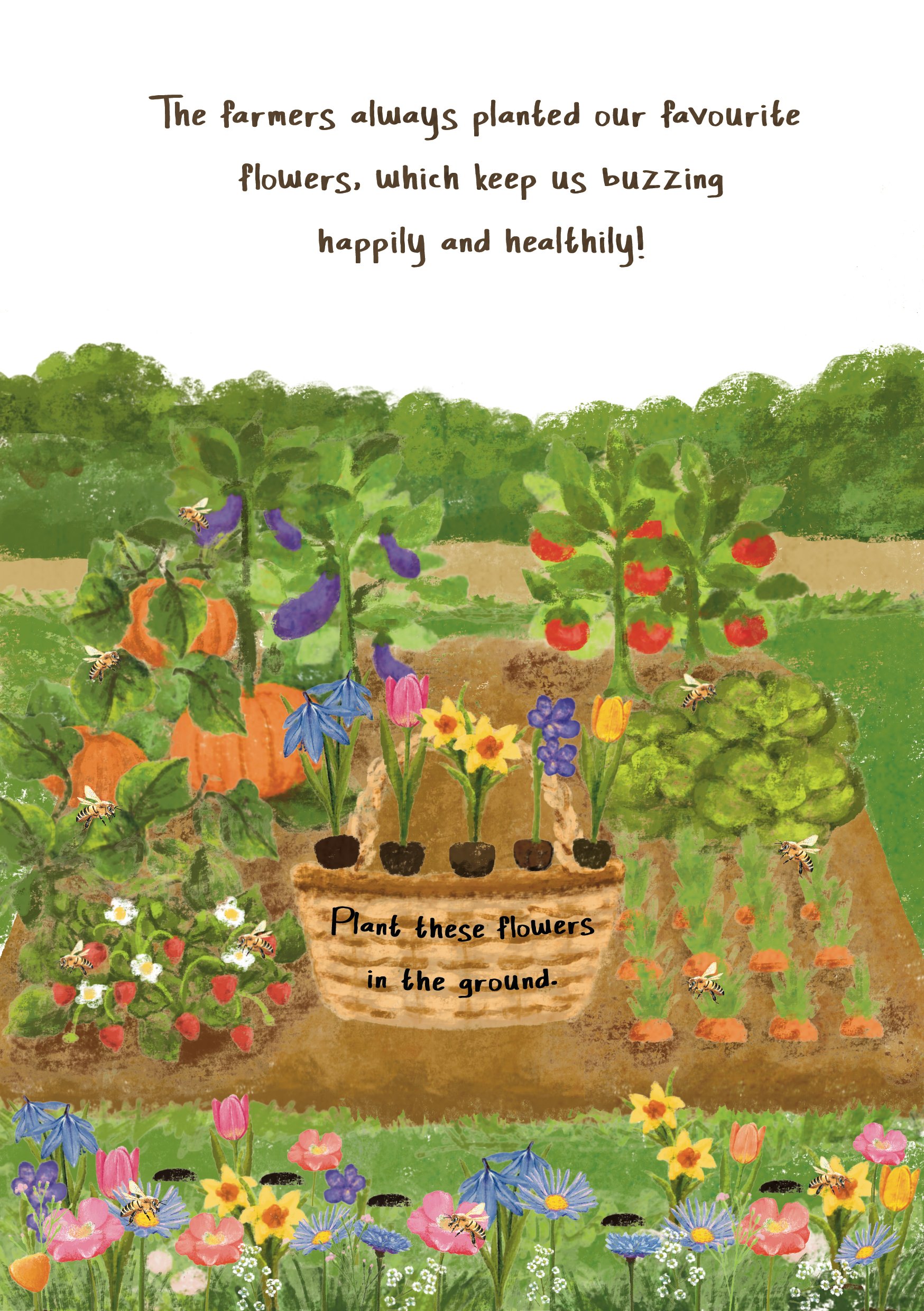
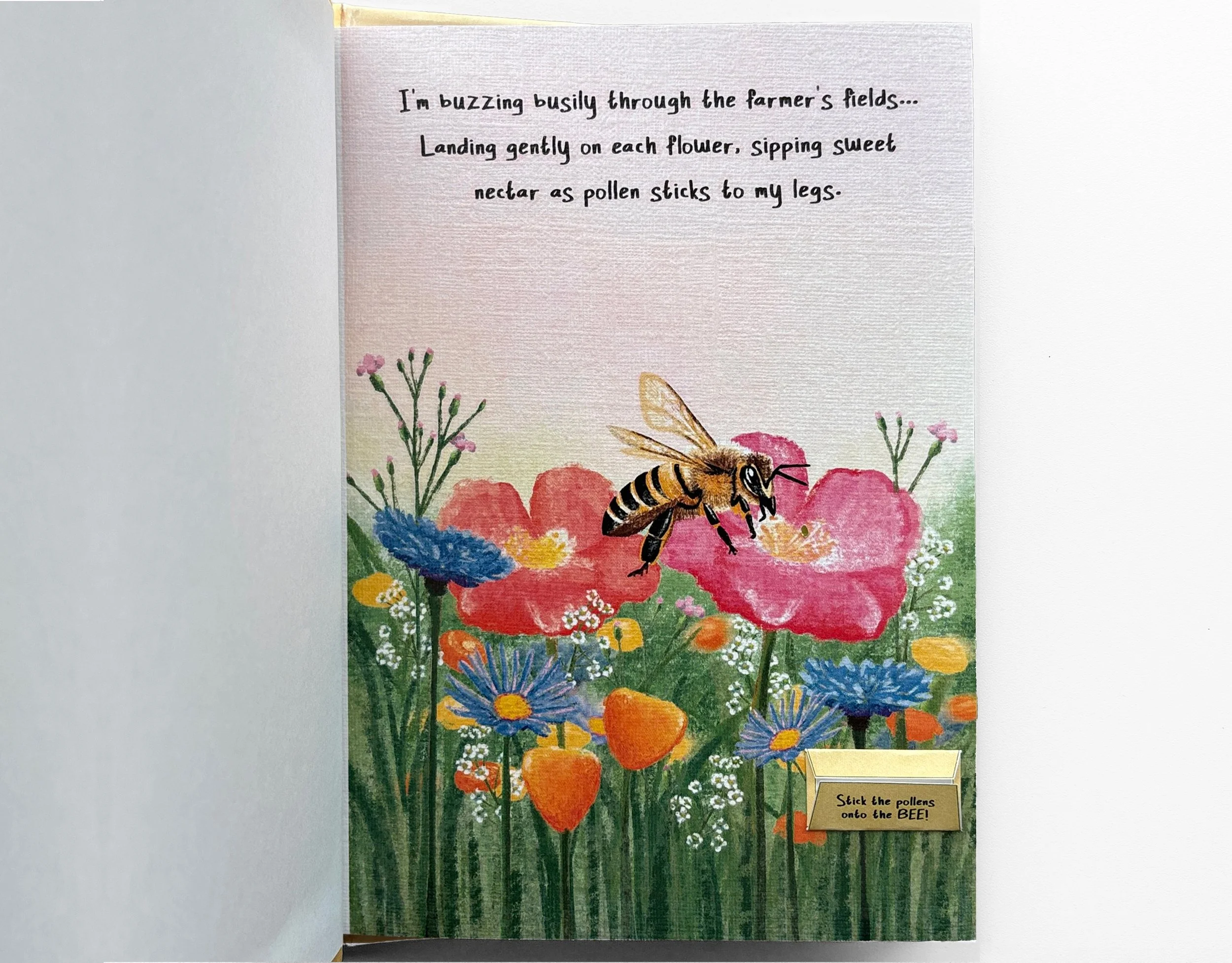
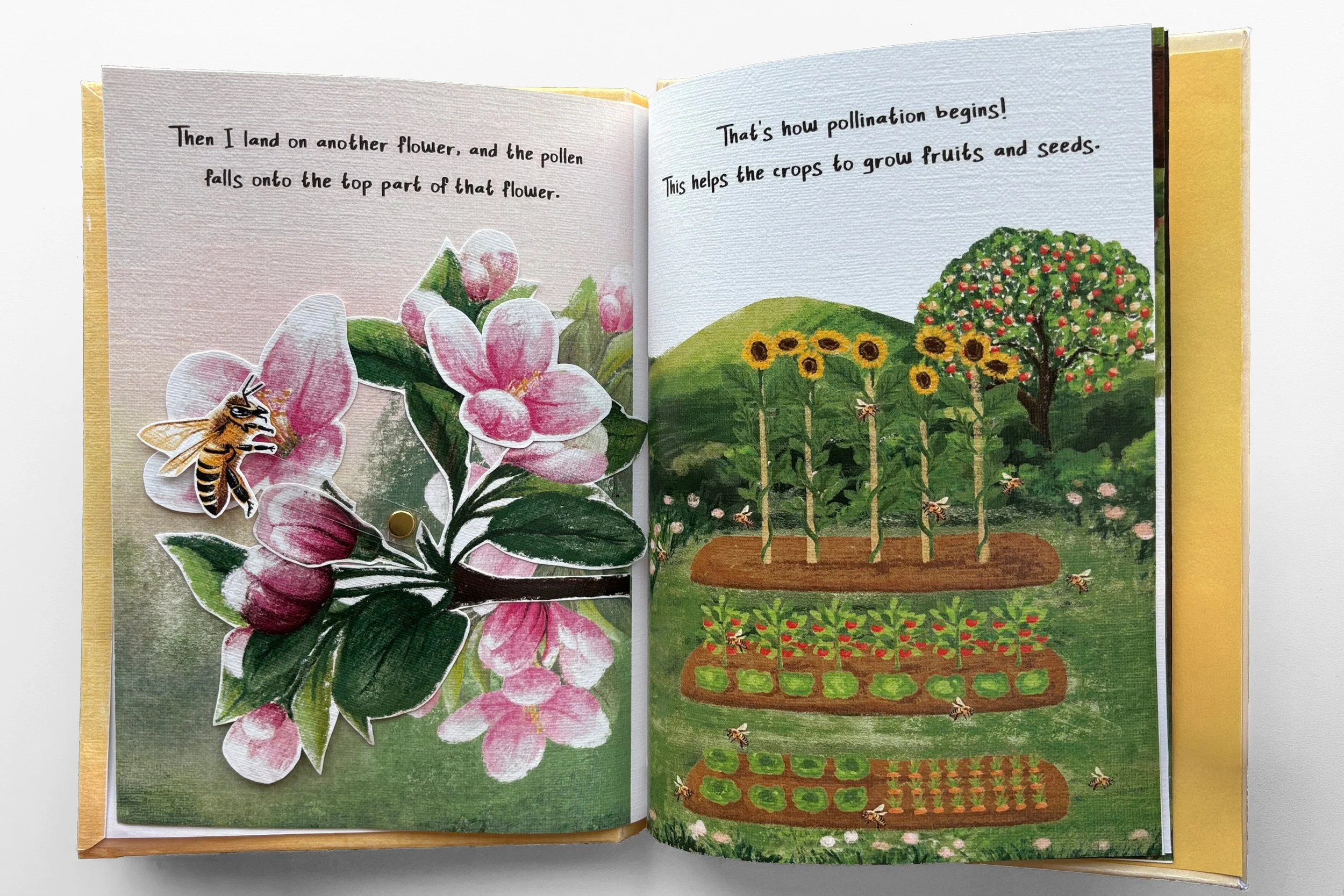
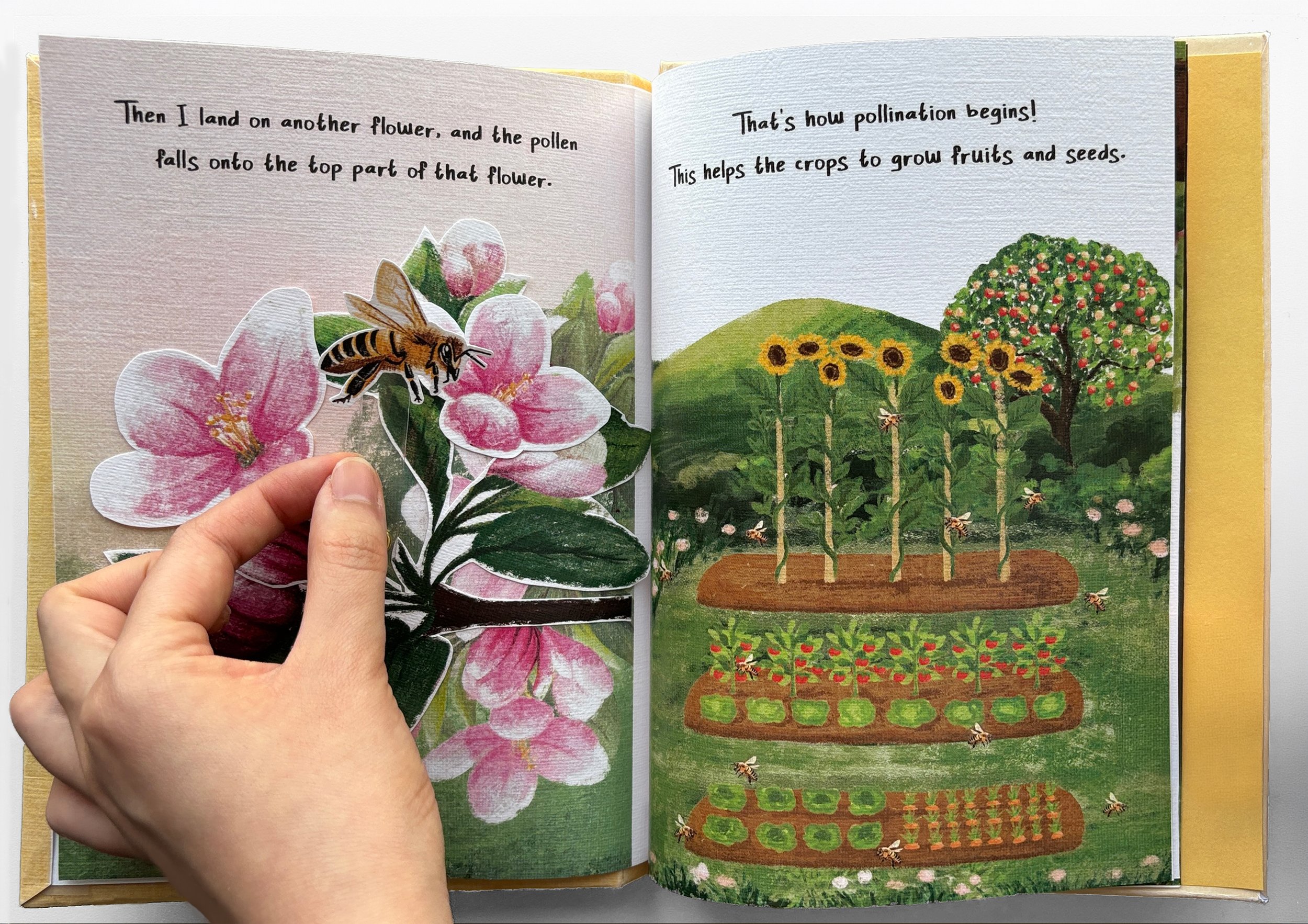
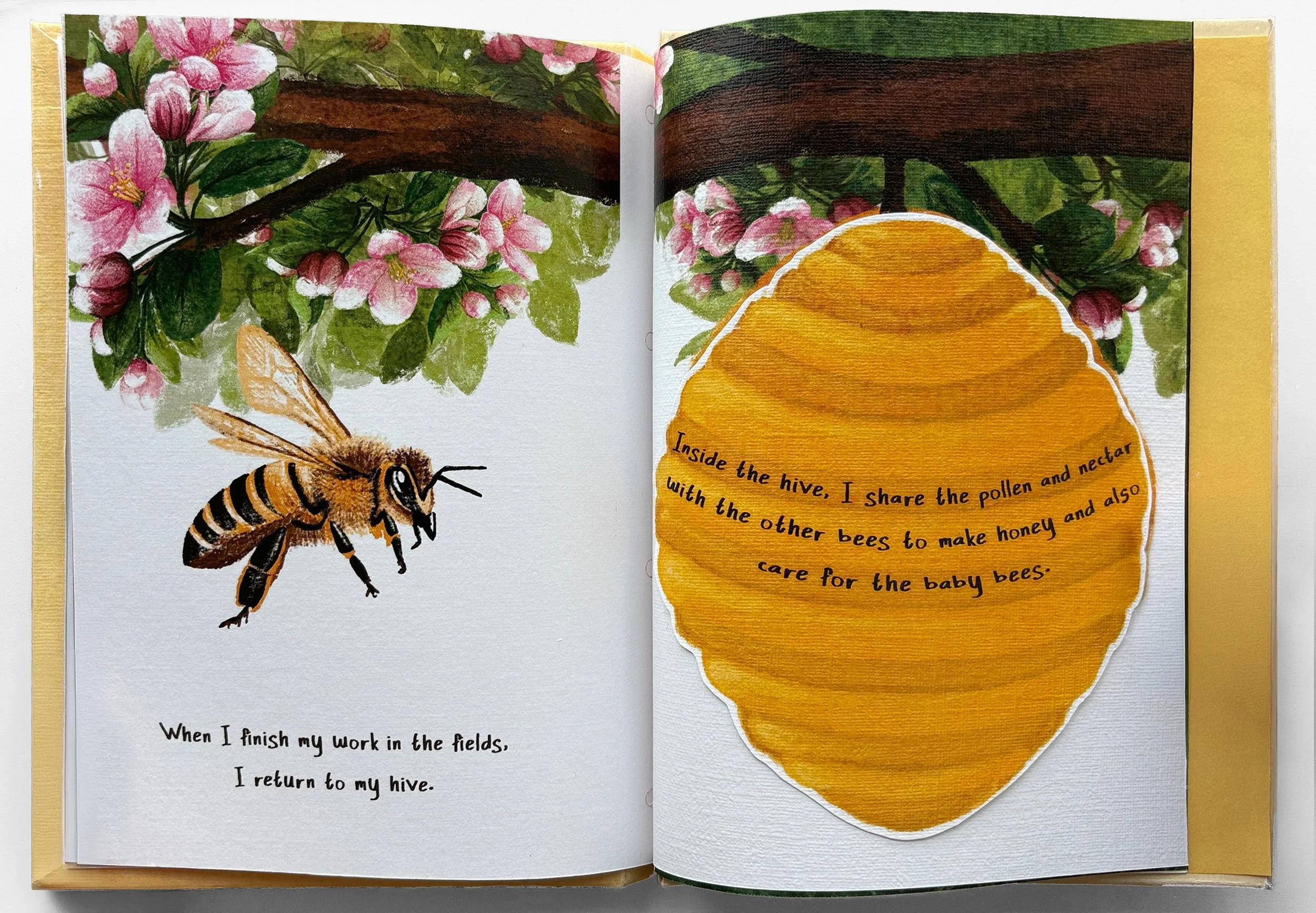
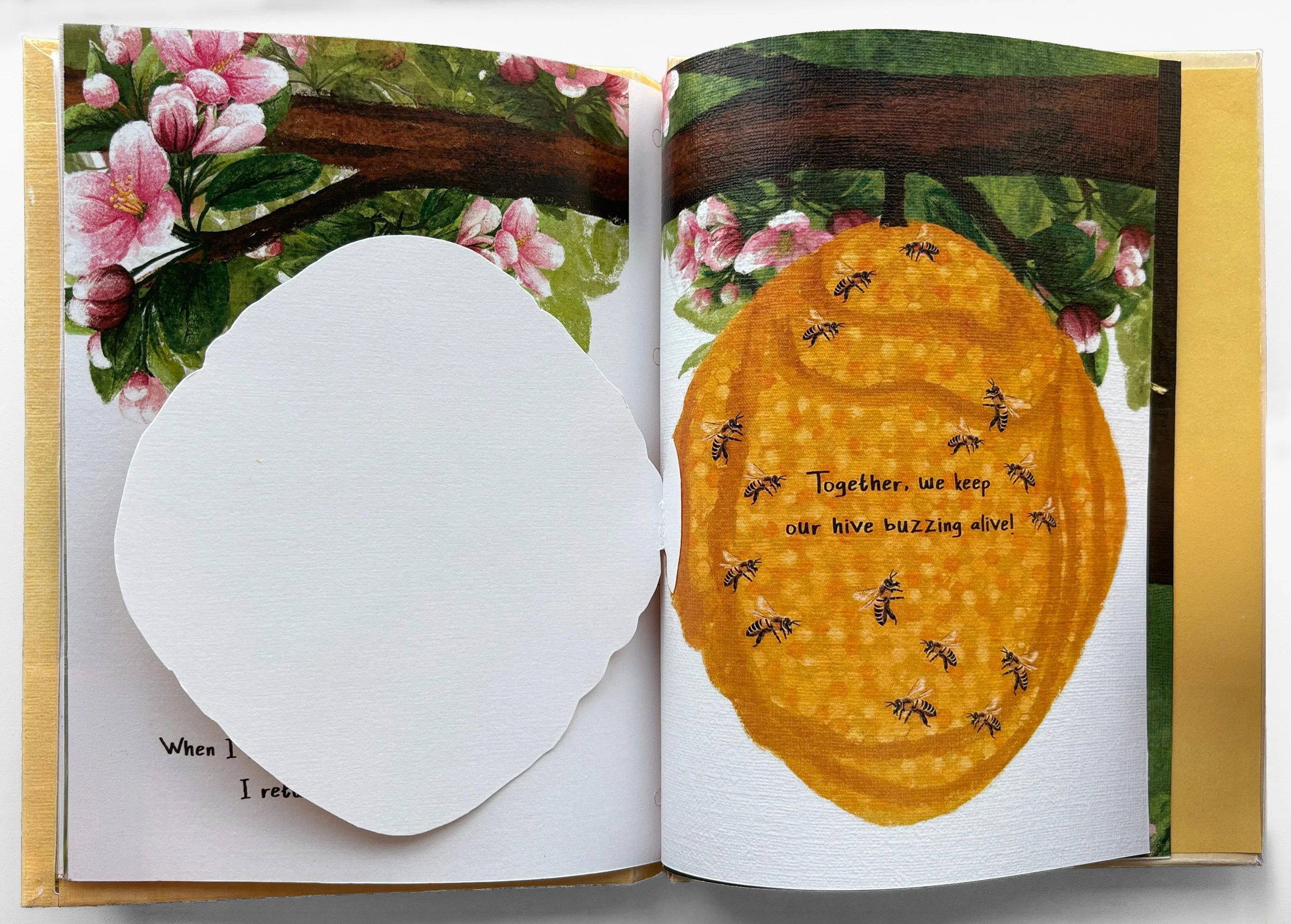
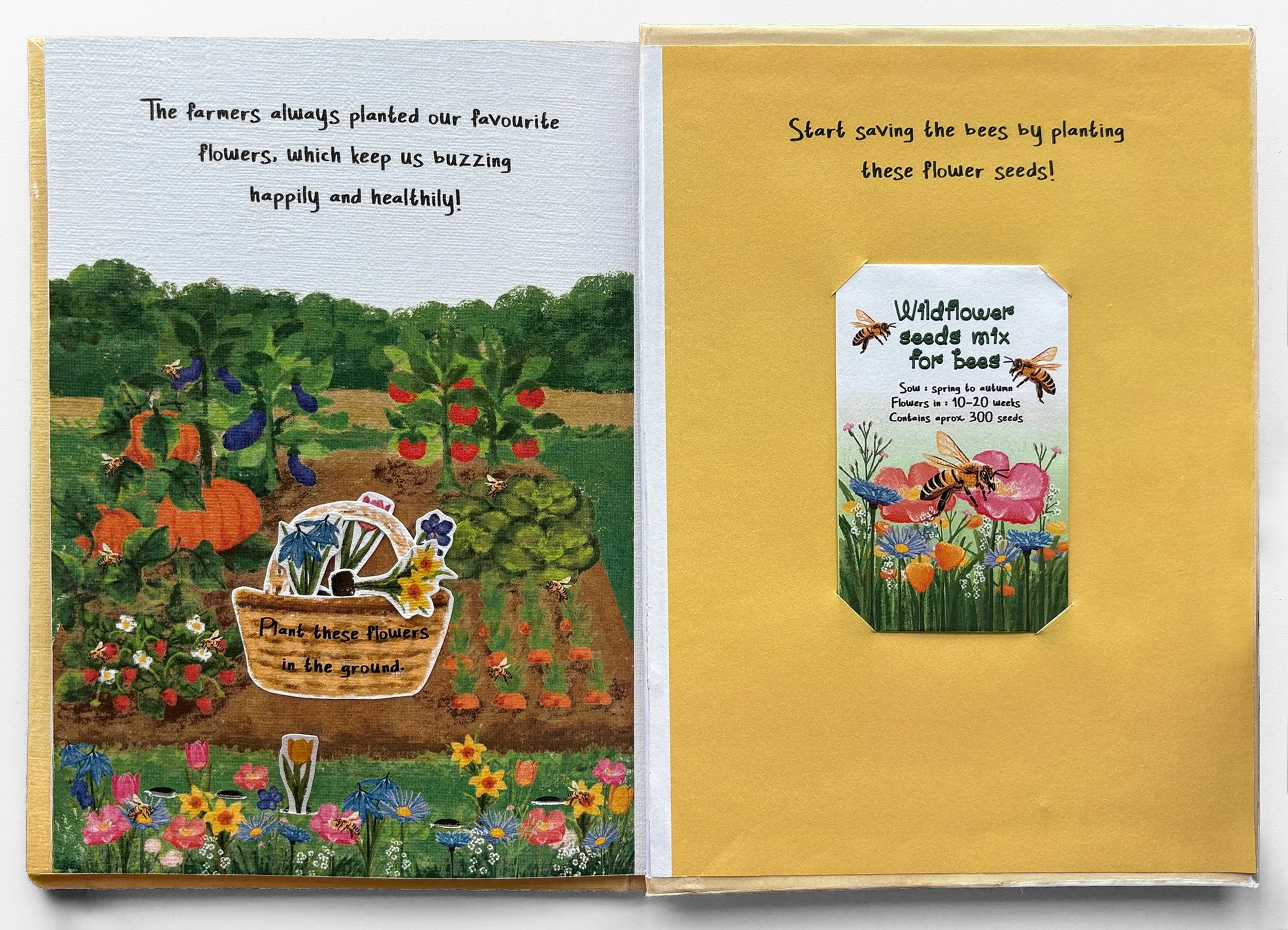
This experiment explored how interactive elements can enhance storytelling by transforming written concepts into hands-on learning experiences. Building on the narrative from the previous experiment, a range of interactions were designed to support engagement and understanding, such as guiding the bee, transferring pollen stickers, lift-the-flap discoveries, and planting flower pieces. Prototyping and peer feedback shaped many of the decisions along the way, particularly making materials more durable and sensory. Some suggestions, like placing a packet of real flower seeds in the book, hinted that learning doesn't stop once the book is closed. By the end, it was clear that giving readers something to touch, move, and do makes a real difference in how much they engage with, understand, and take away from a story.
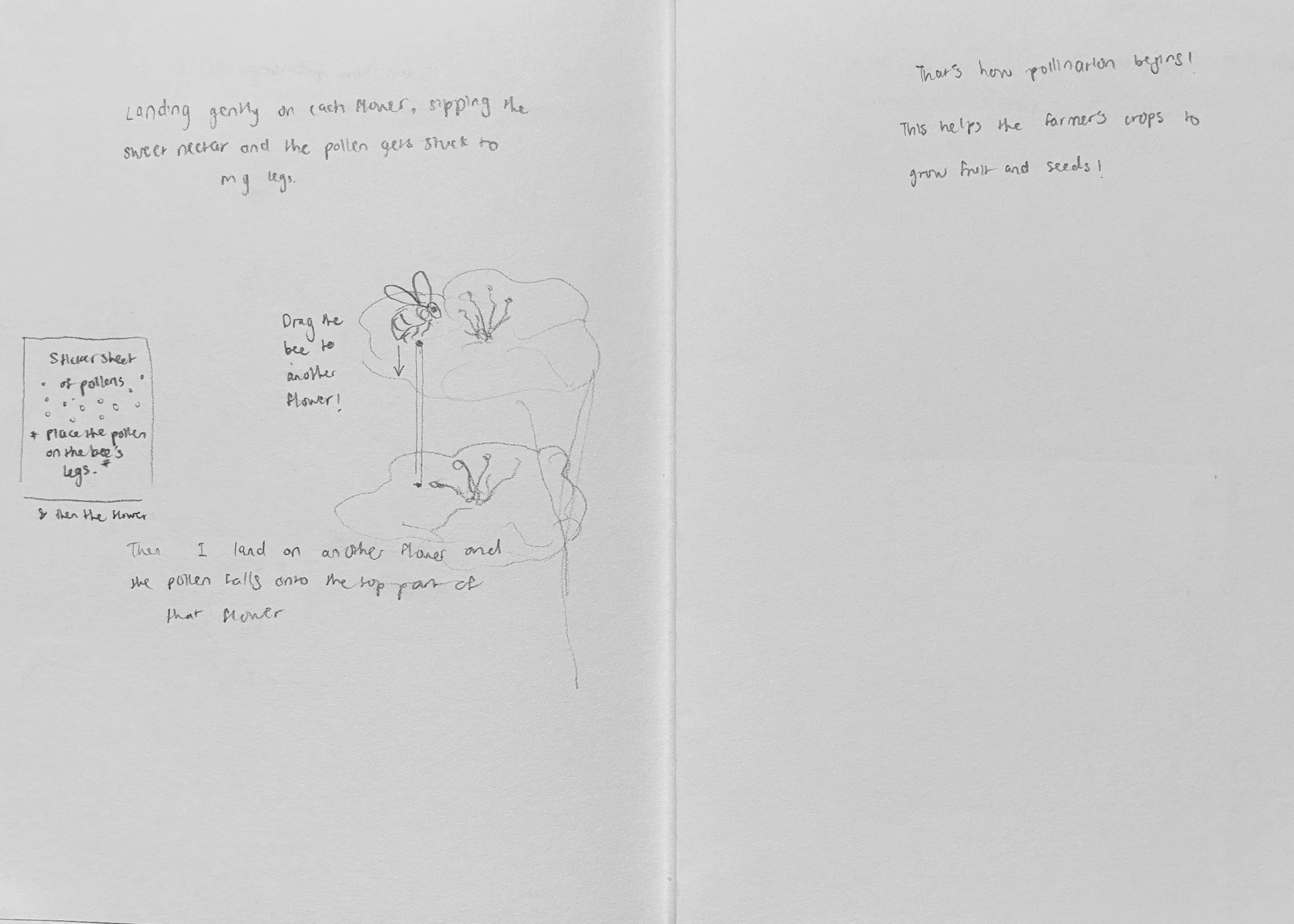
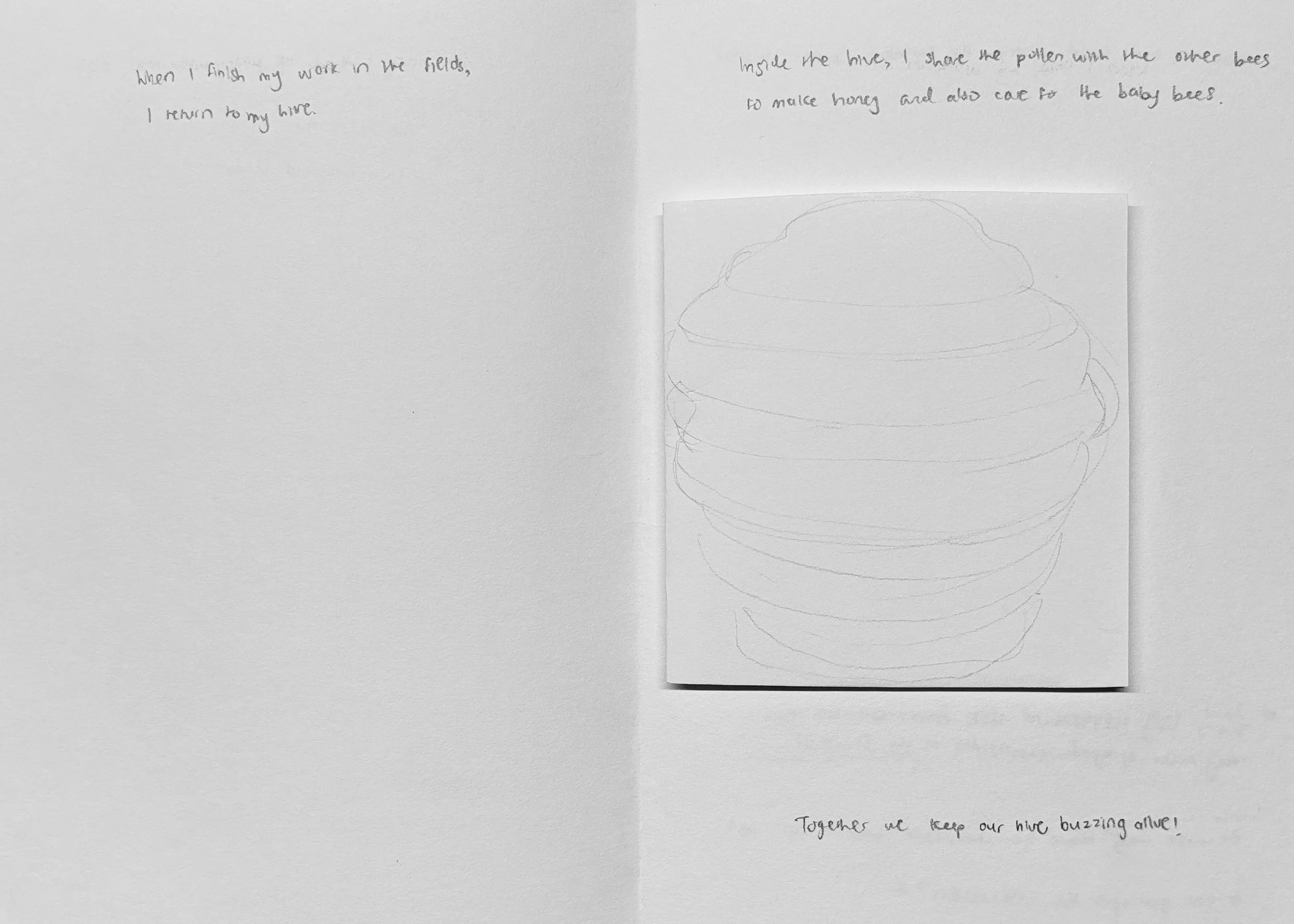
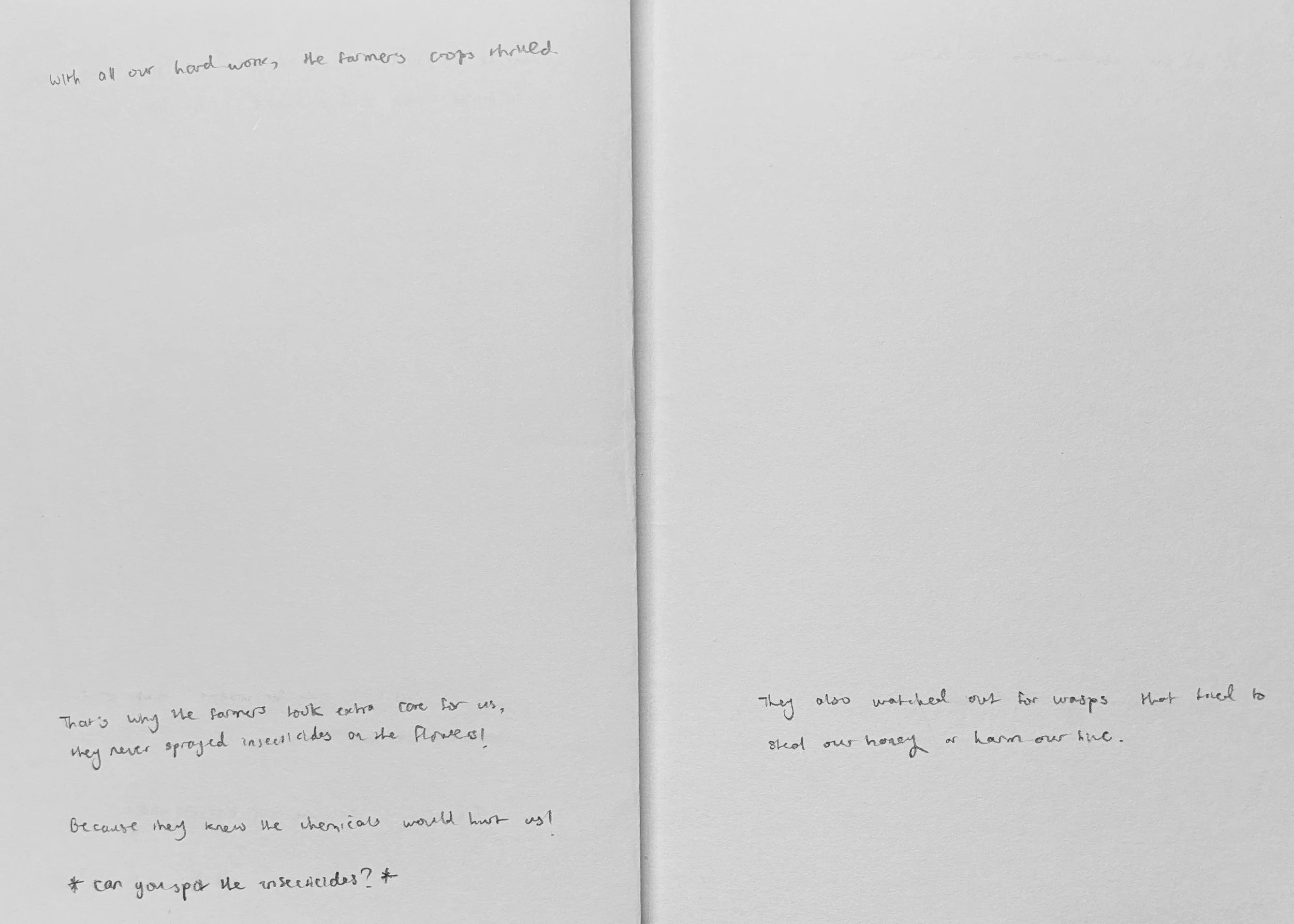
-
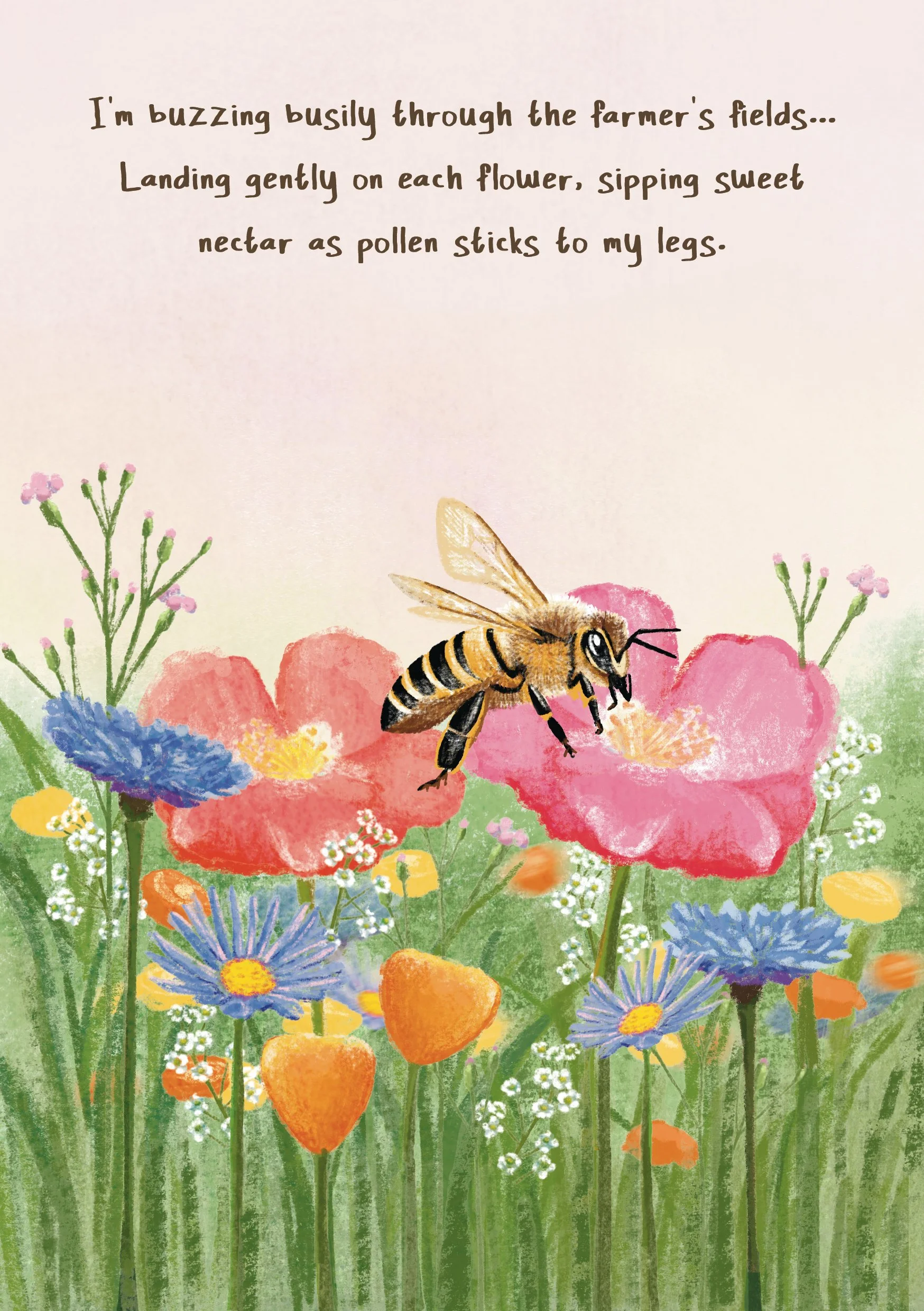
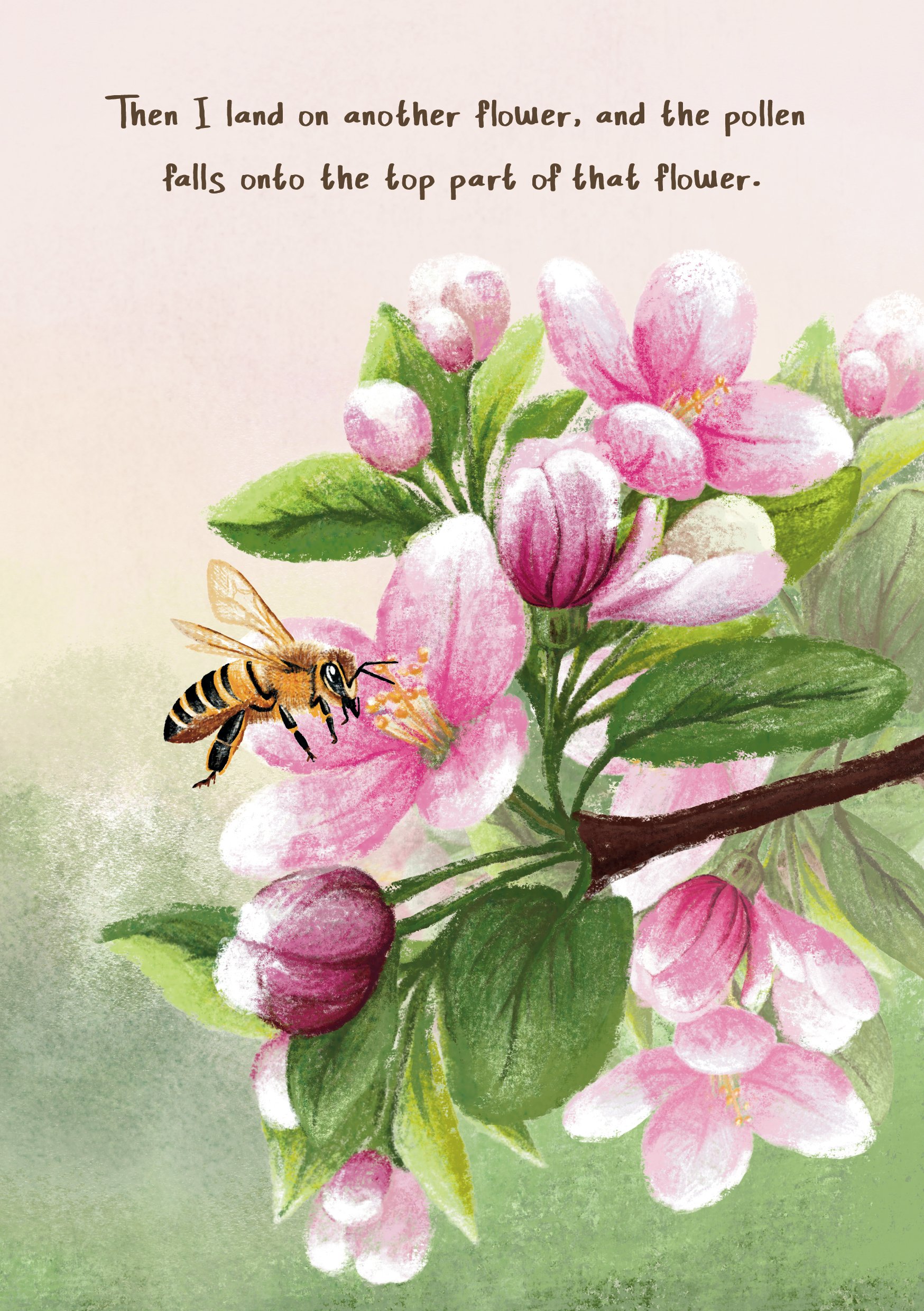
This experiment focused on creating a realistic Honeybee character to support both storytelling and scientific accuracy. By telling the story from the bee’s perspective, readers can develop empathy for the animal and a greater appreciation of its role in the ecosystem. To make the bee relatable and engaging, research suggests that excessive anthropomorphism can create misconceptions and make it more difficult for children to distinguish between fiction and reality. Therefore, the character’s appearance was kept realistic through careful study of Honeybee anatomy and reference images. The findings indicate that realistic character design can enhance both engagement and factual learning while supporting the storybook’s educational purpose.

The Outcome
Other Projects